
Vaginitis Prevention
For vaginitis (vaginal candida / bacterial vaginosis), there is an option to prevent recurrence.
Vaginal candida: With prophylaxis (once weekly × 6 months), the recurrence rate can be expected to fall to about 10 to 20%.
Bacterial vaginosis: There are reports that treating the partner in addition to the patient herself lowered the recurrence rate within 12 weeks from 63% to 35% (roughly halving it).
*Effects vary between individuals. The optimal approach differs depending on the pattern of recurrence and the test results.
Please select the section to jump to.
Note that the prices indicated in this page are all inclusive of tax.
For those living far away, we offer telephone consultations and a delivery service.
Prevention of Vaginal Candida
What is Vaginal Candida?
Vaginal candida (candida vaginitis) is an infection that occurs when a fungus (mold) of the genus Candida multiplies inside the vagina.
It is characterized by intense itching, white crumbly discharge and a stinging sensation, and many people experience it at least once.
On the other hand, a state in which it recurs 4 or more times in 1 year is called recurrent vaginal candida, and it is said that about 60 to 70 percent recur within 6 months.
By using a prevention medication for vaginal candida taken once a week for 6 months, it has been reported that the recurrence rate drops to approximately 10 to 20 percent.
Prophylaxis for Vaginal Candida
The greatest feature of vaginal candida prophylaxis is that it reduces recurrence itself.
By using a prevention medication for vaginal candida taken once a week for 6 months, it has been reported that the recurrence rate drops to approximately 10 to 20 percent.
– You no longer have to keep repeating vaginal tablets and treatment
– Anxiety about symptoms decreases
– Quality of life (QOL) improves
In research,
– Without prophylaxis: about 60 to 70 percent recur within 6 months
– When an antifungal medication is taken once a week for 6 months: the recurrence rate falls to about 10 to 20 percent
is what has been reported.
Candida prevention medication is recommended for those to whom any of the following applies.
– You have recurring vaginal candida 4 or more times in 1 year
– Every time, the itching and discomfort are severe and interfere with daily life
– You have repeated vaginal tablets and treatment many times
– You constantly feel anxious that “it might come back again”
Not only the number of episodes but also how distressing they are and how strong the anxiety is are important factors in the decision.
How to Take It
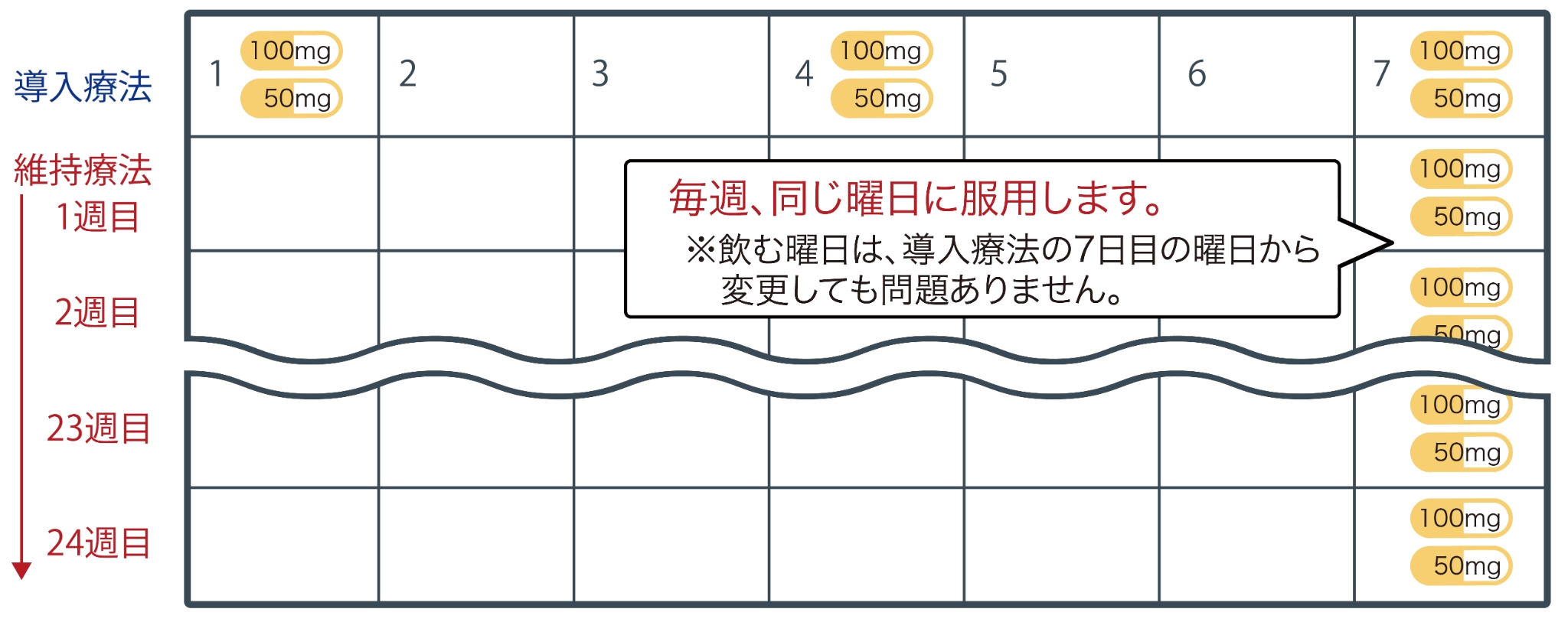
Vaginal candida prophylaxis is carried out in 2 stages: “induction therapy (induction phase)” and “maintenance therapy (maintenance phase)”.
Induction therapy (induction phase)
Taken on day 1, day 4 and day 7 (3 times in total)
Maintenance therapy (maintenance phase)
Taken once a week, continued as a rule for 6 months.
6 months is the standard maintenance therapy period, regarded as offering the best balance between recurrence suppression and safety.
However, 6 months does not guarantee a complete cure; once it has been finished, we monitor the course and consider the next steps as needed.
If there are side effects or a wish to become pregnant, the duration is adjusted in consultation with a doctor.
Prices
For first-time patients, the induction + 6-month continuation package offers the best value. Those continuing can choose the amount they prefer from 1 month / 3 months / 6 months.
Induction package (days 1, 4 and 7): 4,000 JPY
1-month continuation (once weekly × 4 doses): 5,000 JPY
3-month continuation (once weekly × 12 doses): 12,000 JPY
6-month continuation (once weekly × 24 doses): 20,000 JPY
Induction + 6-month continuation package: 22,000 JPY
Patients starting or in the induction phase of the vaginal candida prevention medication can receive vaginal discharge testing and contraceptive injections at a special price.
Vaginal discharge test (vaginal candidiasis, trichomonas, bacterial vaginosis): 3,000 JPY (normally 4,000 JPY)
Contraceptive injection (Depo-Provera): 8,000 JPY per dose* or 22,000 JPY per 3 doses* (normally 9,000 JPY per dose or 25,000 JPY per 3 doses)
*Available at the special price for those purchasing PrEP, Doxy-PEP, or vaginal candida prevention medication at our clinic.
Prevention of Bacterial Vaginosis
What is Bacterial Vaginosis?
Bacterial vaginosis is a condition that occurs when the balance of bacteria inside the vagina is disrupted. It can develop even in those with no experience of sexual intercourse, and many women may experience it at least once.
It does not usually cause serious symptoms, but it may raise the risk of HIV infection and of contracting or developing other STIs.
In those who are pregnant, it is also said to increase the risk of premature birth and miscarriage.
Symptoms and Causes of Bacterial Vaginosis
The symptoms of bacterial vaginosis are typically those listed below, but they resemble those of STIs such as gonorrhea and chlamydia, so they are difficult to distinguish by symptoms alone.
Testing makes diagnosis possible. Changes in vaginal discharge also occur with other conditions.
– The amount of vaginal discharge increases
– The discharge becomes grayish-white
– A squid-like odor
– Itching and discomfort in the genital area
– Having multiple sexual partners
– Not using a condom during intercourse
– Frequent vaginal douching
– Hormonal fluctuations (menstruation, pregnancy, menopause, etc.)
– Reduced immunity due to stress, insomnia, etc.
Recurrence of Bacterial Vaginosis
Recurrence and repeated episodes of bacterial vaginosis are commonly seen.
Even when symptoms improve temporarily after treatment, there are recurrence tendencies such as the following.
– About 1 in 3 people have a recurrence of symptoms within 3 months
– More than half have a recurrence of symptoms within 12 months
– Bacteria associated with bacterial vaginosis are present on the partner’s genitals
– Sexual intercourse with a new partner
– The balance of bacteria inside the vagina remains disrupted
– Hormonal fluctuations (menstruation, pregnancy, menopause, etc.)
– Reduced immunity due to stress, insomnia, etc.
– Frequent vaginal douching
Recurrence of bacterial vaginosis is sometimes due to a new cause, but there are also cases in which treatment was insufficient and bacteria that remained multiply again.
For this reason, it is important to receive appropriate treatment and to consider reviewing lifestyle habits and involving the partner.
Prevention of Bacterial Vaginosis
It is known that bacterial vaginosis can be prevented by treating the partner together with the patient.
A randomized controlled trial published in March 2025 reported that, in addition to standard treatment for the woman, giving the male partner 7 days of oral treatment plus topical treatment reduced the recurrence rate within 12 weeks from 63% to 35% (roughly a halving).
Treatment involves using a vaginal tablet (a medication inserted into the vagina) for 6 days, before bedtime.
Symptoms often improve within 2 to 3 days of starting the vaginal tablet, but it is important to use the full 6-day course.
Vaginal tablet: 4,500 JPY
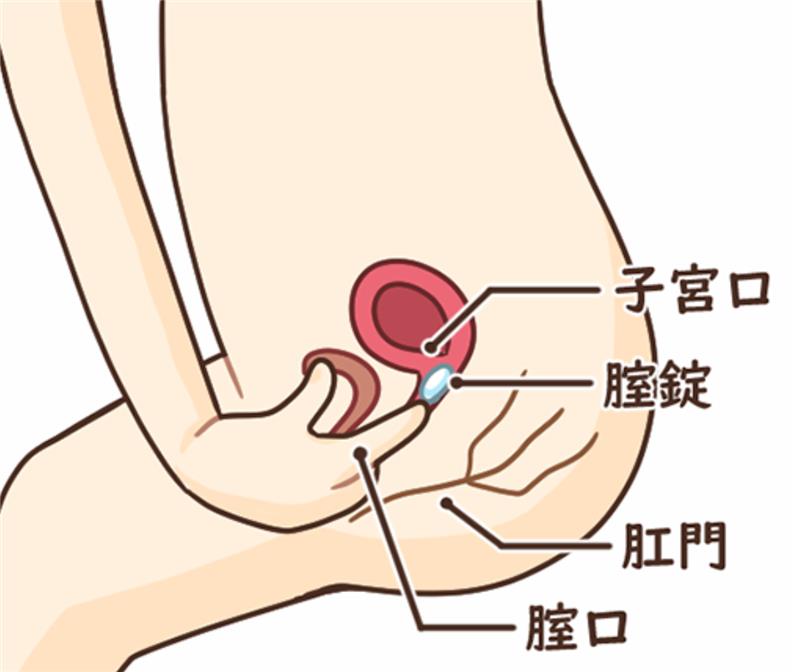
*(Figure) Excerpted from Okinazole
Wash your hands thoroughly with soap, then squat with your legs spread apart.
As shown in the figure, insert the vaginal tablet deep inside the vagina with your fingertip.
For details, please see the official Okinazole website via the button below.
This combines medication (oral) for 7 days with a topical ointment for the genital area.
Oral medication + topical ointment: 6,000 JPY
If only one of these is desired, they can be prescribed separately at the following prices.
Topical ointment: 4,000 JPY/tube
Oral medication: 4,000 JPY
*We hand the medication over at the clinic on the same day. There is therefore no need to go to a pharmacy to collect it.
Testing for Bacterial Vaginosis and Related Conditions
Testing for bacterial vaginosis is carried out by having you swab the vagina to collect a vaginal discharge sample, which is then examined under a microscope to make a diagnosis.
Because you collect the discharge yourself, there is no examination of the genital area and no pain. Testing through to diagnosis can be completed in approximately 30 minutes.
– Test items: Vaginal candidiasis, trichomonas, bacterial vaginosis
– Fee: 4,000 JPY
– Test results: Candida, trichomonas, and bacterial vaginosis are available same-day (approximately 30 minutes)
*The doctor will explain the vaginal discharge test results, so a separate consultation fee will apply.
Consultation Flow
The consultation flow for prescriptions relating to vaginitis prevention is as follows.
Medical Interview and Consultation with a Doctor
In consultation with the doctor, we consider the indication for the medication, how to take it and, if necessary, testing.
Prescription and Payment
At reception, we hand over acne treatment, prevention medication, etc. From the 2nd time onward as well, prescriptions are issued while the situation is checked with the doctor at a consultation (a consultation fee applies).
Frequently Asked Questions
If I take vaginal candida prevention medication for 6 months, will it be completely cured?
6 months is the standard maintenance therapy period. There is no guarantee that recurrence will fall to zero, but in many people the frequency and severity decrease.
Do I need to keep taking vaginal candida prevention medication for the rest of my life?
Usually it is stopped once at 6 months, and the course is then monitored. If there are side effects or a wish to become pregnant, the duration can be adjusted in consultation with a doctor.
Depending on the pattern of recurrence and the test results, our doctors will propose the most suitable way of taking it.
Are vaginal candida and bacterial vaginosis "STIs"?
Vaginal candida and bacterial vaginosis are conditions that occur when the balance of bacteria inside the vagina is disrupted, and they are somewhat different from so-called "STIs".
However, sexual intercourse (especially without a condom) and the influence of a partner can make them more likely to worsen or recur.
If vaginal candida or bacterial vaginosis recurs soon after treatment, does that mean the treatment is not working?
Not necessarily. These forms of vaginitis are known to recur easily, and even once they improve with treatment, the vaginal environment can become disrupted again through the influence of a partner and other factors, leading to recurrence.
If you have repeated recurrences, please consult us, including about treatment methods, lifestyle habits and whether partner treatment is needed.
Should my partner be treated as well?
If you have repeated recurrences, or if symptoms appear every time you have intercourse, it is worth considering treatment for the partner as well as for the woman herself.
Because the benefits differ depending on the situation, our doctors will explain this fully in light of your recurrence pattern and test results.
Is it all right to have sexual intercourse during or immediately after treatment?
During periods when symptoms are strong and during treatment, stimulation can worsen the condition or lead to recurrence, so where possible we recommend refraining until treatment has finished and symptoms have settled.
For those with repeated recurrences, using condoms and considering partner treatment can also help prevent recurrence.
Can you tell whether it is vaginal candida or bacterial vaginosis from the amount and character of the "vaginal discharge" alone?
Other infections such as gonorrhea and chlamydia can have symptoms similar to vaginal candida and bacterial vaginosis, so it can be difficult to judge from symptoms alone.
It is important to confirm the cause with a vaginal discharge test and choose the appropriate treatment.
We also provide testing, treatment and prevention for STIs.